A safe place, day or night, when every shelter is full.
We convert donated trailers into Arks: safe, warm, supervised overflow space for people who have been turned away because there are no beds left. The first two, Ark 001 and Ark 002, are donated and waiting near Gravenhurst, Ontario. We need a place to finish them, hosts to open them, and builders and sponsors to get them ready.
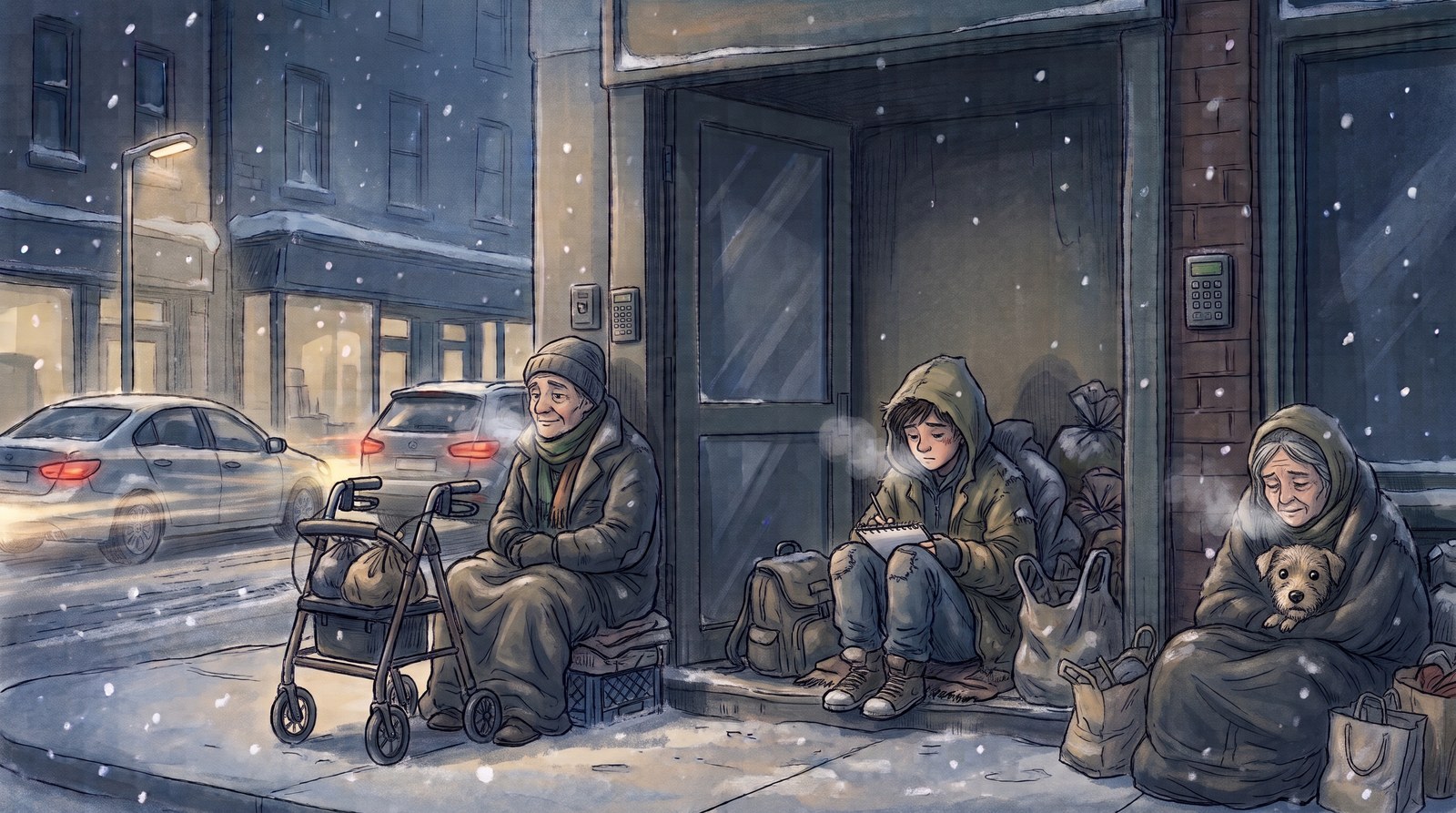
Shelters aren't failing. They're full.
Every night, shelter staff face the same moment: the beds are taken, and someone is still at the door. It happens in communities across Canada. In January, being turned away can mean a night in life-threatening cold. In July, it can mean dangerous heat.
New shelter beds take years to build. People turned away tonight can't wait that long.
people were counted sleeping unsheltered across 75 Canadian communities on a single night in 2025, including 4,763 in encampments.
Source: Everyone Counts 2025, Housing, Infrastructure and Communities Canada. A one-night count; the true number over a year is higher.
Two Arks. Donated, and ready to finish.
Two donated 40-foot trailers, Ark 001 and Ark 002, are standing near Gravenhurst. The host site first planned for them cannot place them this winter, so we are looking for a winter-accessible place to finish the conversion and for organisations that need overflow space. Finished Arks are given free of charge. If open and full every day, one Ark has room for 9,125 to 10,950 stays a year. That is a ceiling, not a forecast, and actual use will vary. We'll log every day and night they're used and publish the results.
- DoneTrailers donatedTwo 40-foot units on hand.
- DoneGas systems assessedRemoved, or certified by a licensed technician.
- Needed nowBuild siteA winter-accessible place to finish the work.
- NextRetrofitAssess, repair, insulate, wire, heat.
- ThenOpen with a hostUp to 20 people by day and 5 to 10 overnight, subject to approval.
- AfterReport backResults published.
Donated, standing, and waiting for hands.
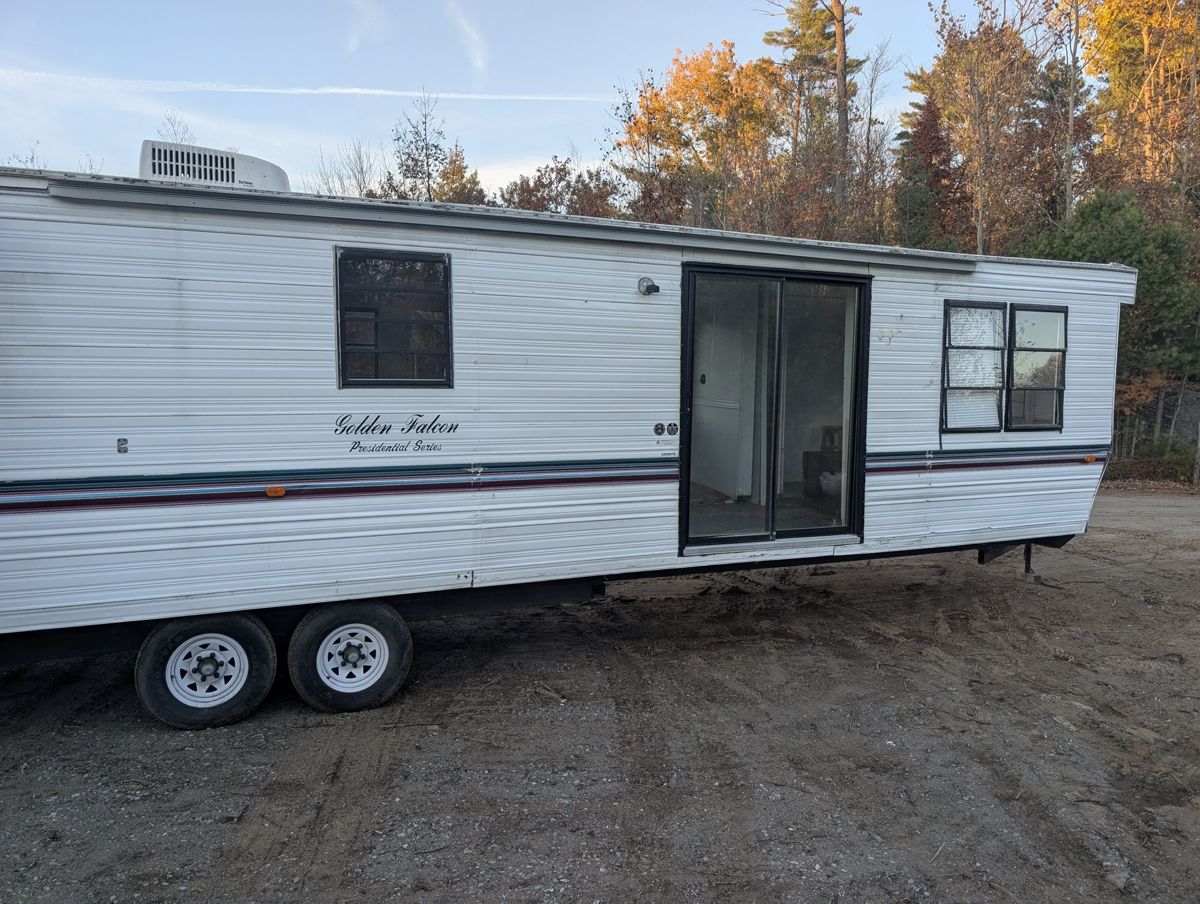
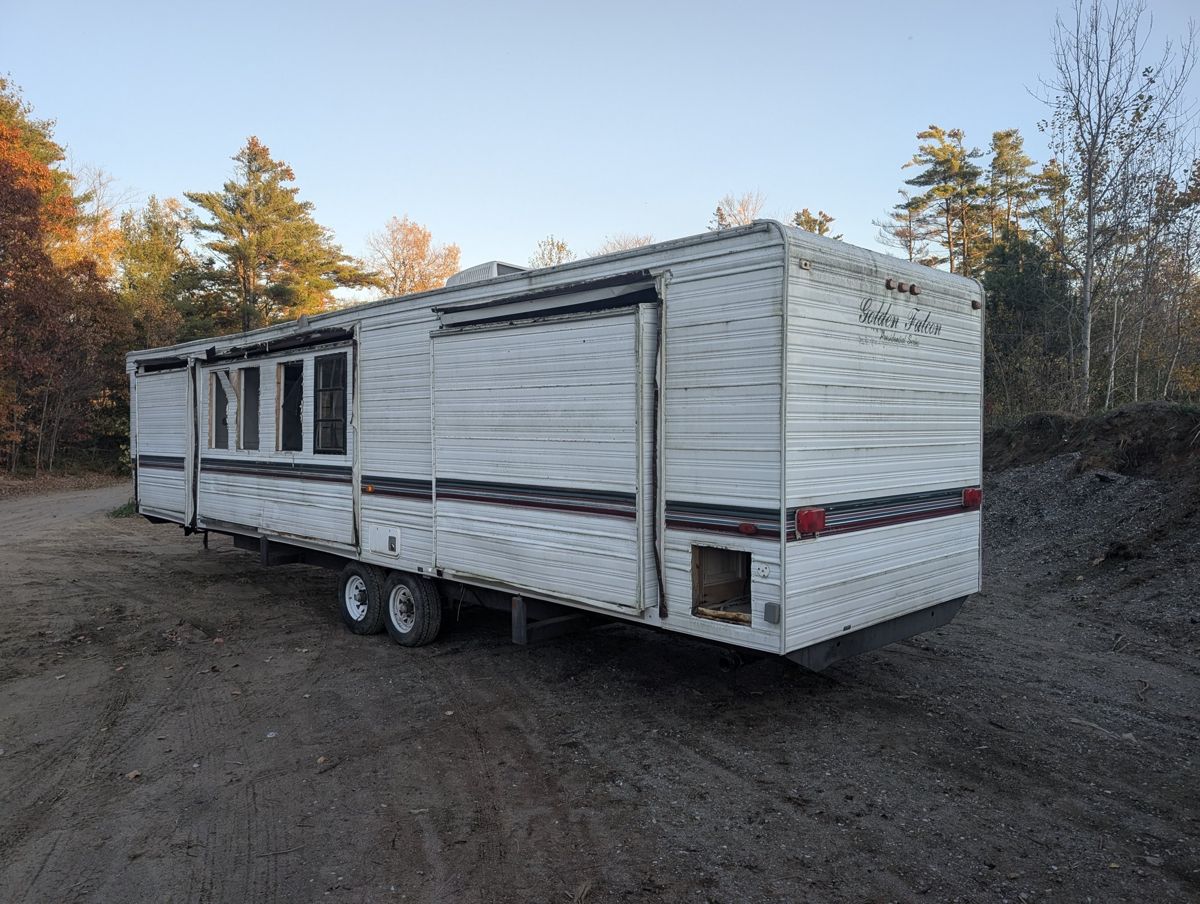
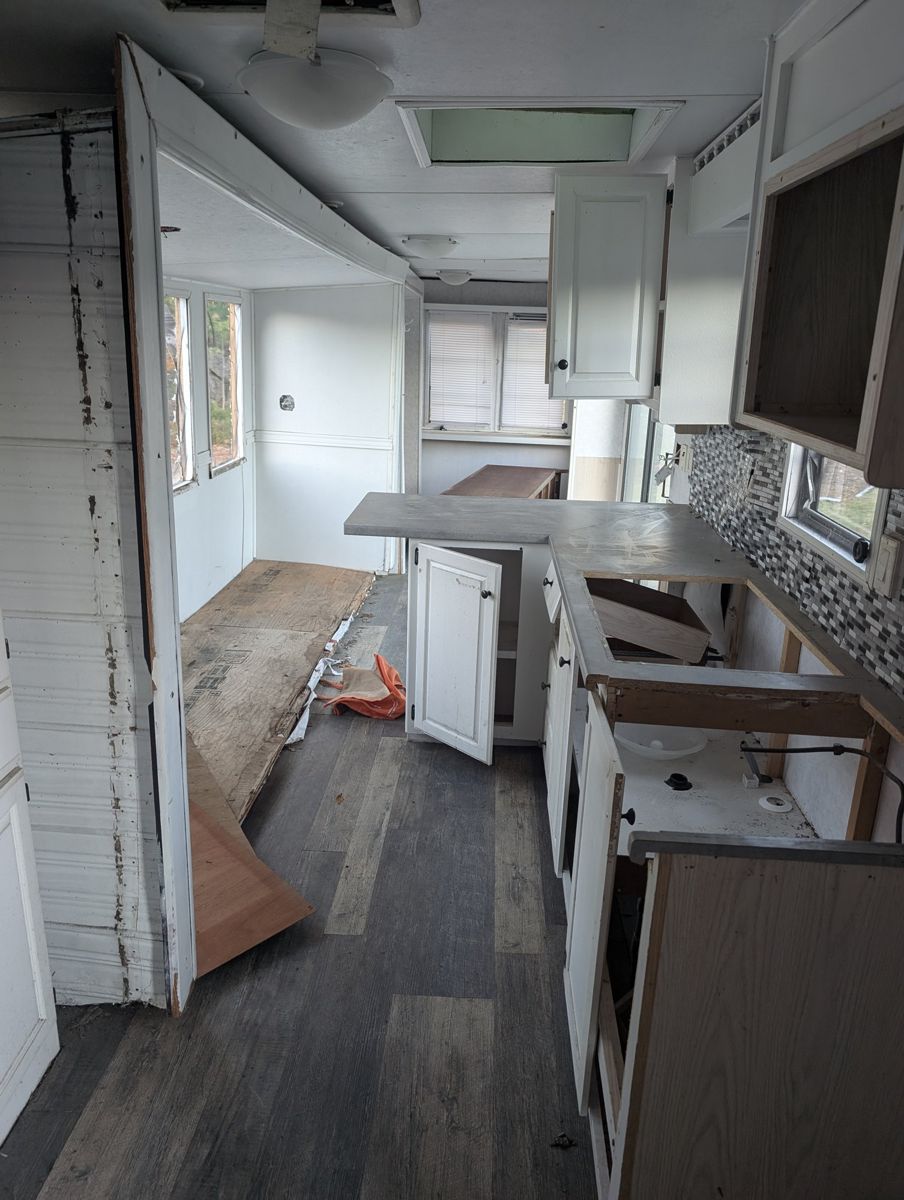
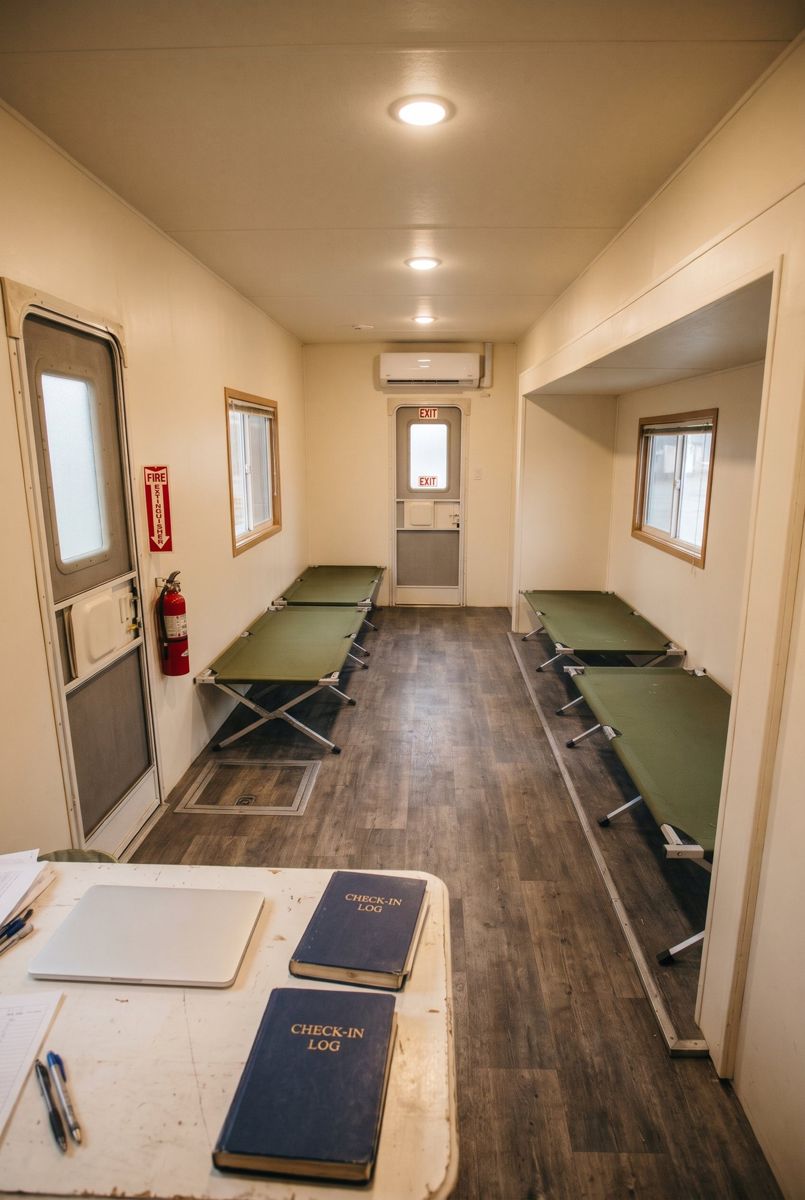
Built for one job: keeping people safe from the elements, day or night.
Always supervised
A trained supervisor from the host organisation is inside every open Ark, day or night, at a desk by the door.
Gas handled properly
Where a trailer's propane system is sound, it stays, certified and documented by a licensed gas technician. Where it isn't, it comes out. Either way a technician signs off before anyone is let in.
Warm in winter, cool in summer
An electric cold-climate heat pump heats and cools. Wiring is installed or certified by a licensed electrician.
Fresh air, always watched
A heat-recovery ventilator brings in fresh air. Smoke, carbon monoxide and CO₂ are monitored.
Open floor, two exits
Folding cots and chairs, no bunks or partitions. The centre aisle stays clear from door to door.
Mobile and all-season
Wheels stay on. Units plug into the host building and can be used in all seasons, as shelter from cold, storms and extreme heat. Because they are mobile, they can also stand in temporarily when a main shelter closes for upgrades or shuts down unexpectedly.
These units are not housing, and they don't replace shelters. They are overflow space for the times, day or night, when there is nowhere else to go.
Next: 10 Arks. 100 people. One trailer at a time.
We hope to expand across Canada right away. As the pilot proves the model, we'll share everything we learned: the retrofit checklist, the safety rules and the supervision model. Then the next community can turn a donated trailer into an Ark of its own.
On the horizon: about 2,000 Arks would be enough for every person counted sleeping outside in Canada on a single night.
- 1 The pilotNowTwo donated trailers, near Gravenhurst 2 Arks20 people
- 2 The first fleetNextMuskoka, Simcoe County and nearby towns 10 Arks100 people
- 3 A provinceCommunities across Ontario 100 Arks1,000 people
- 4 A nationAcross Canada 1,000 Arks10,000 people
- 5 Everyone countedEvery person counted sleeping outside 2,000 Arks20,000 people
Help finish two warming-centre trailers before deep winter.
The trailers were given to us. The work to make them safe and warm was not. Your gift pays for permits, inspections, building materials, the build site and the people doing the work.
Phase 1 goal: $7,378 to tow both trailers to a winter build site and buy the first building materials. When we reach it, we will raise the goal for the next stage, step by step, until our start-up costs of $58,286 are covered. Start-up costs are paid once, so we expect each trailer after these two to cost much less. Anything raised beyond that goes toward converting the next donated trailer.
Every gift counts, big or small. Even $10 or $20 brings us closer to Phase 1. On the donation page you can type any amount you like.
There's a place for you in this.
Licensed trades
We need licensed electricians and HVAC technicians to wire shore power, install heat pumps, or certify what's already there.
Offer your tradeVolunteers, 18+
Help with strip-out where needed, insulation, sealing and cleanup. Bring your own safety boots; we'll supply the rest.
Sign up to volunteerFaith communities
Pray with us, send hands and materials, and consider becoming a host site as the model grows.
Partner with usDonors and suppliers
Sponsor an Ark, or donate building materials, towing, trade labour, insulation, waterproofing, heat pumps, ventilators or detectors.
Sponsor or donateShelters and agencies
Turning people away on busy nights? Talk to us about overflow units for your community.
Start a conversationMunicipal leaders
We work with fire, building and planning staff before we build. Ask us for the pilot summary.
Request the summaryQuestions we hear most
Is this housing?
No. It's short-term space, day or night, for people who have been turned away because shelters are full. It doesn't replace shelters or housing.
Who runs the Arks?
The host organisation does. A trained supervisor is inside each open Ark, awake and on duty, day or night.
Is it safe?
Safety comes first. Any gas system on board is either removed or certified by a licensed technician, licensed trades do licensed work, and each Ark is reviewed with local fire and building officials before anyone uses it.
Why is it called an Ark?
Like Noah's ark, it isn't a destination. It's a safe place to be carried through the storm, in any weather, until the danger passes. Each Ark is a donated trailer, designed for up to 20 people through the day and 5 to 10 overnight, subject to fire marshal and spacing approval.
Can my community do this?
That's the goal. We hope to expand across Canada right away, and we'll publish the model so other communities can follow it. Get in touch now if you're interested.
Are pets welcome?
Yes, wherever the host allows. People will often stay outside sooner than give up an animal, so an Ark makes room for both.
Do you issue tax receipts?
Not at this time. Our books are open and available to anyone who asks.
A community effort, led by a chaplain.
Welcome Hope Ark was founded by Chaplain Mark Robertson. We run on donated trailers, donated materials, volunteer hands and community fundraising. We work with local faith communities and licensed tradespeople.
Let's keep a light on.
Tell us how you'd like to help, and we'll be in touch.